
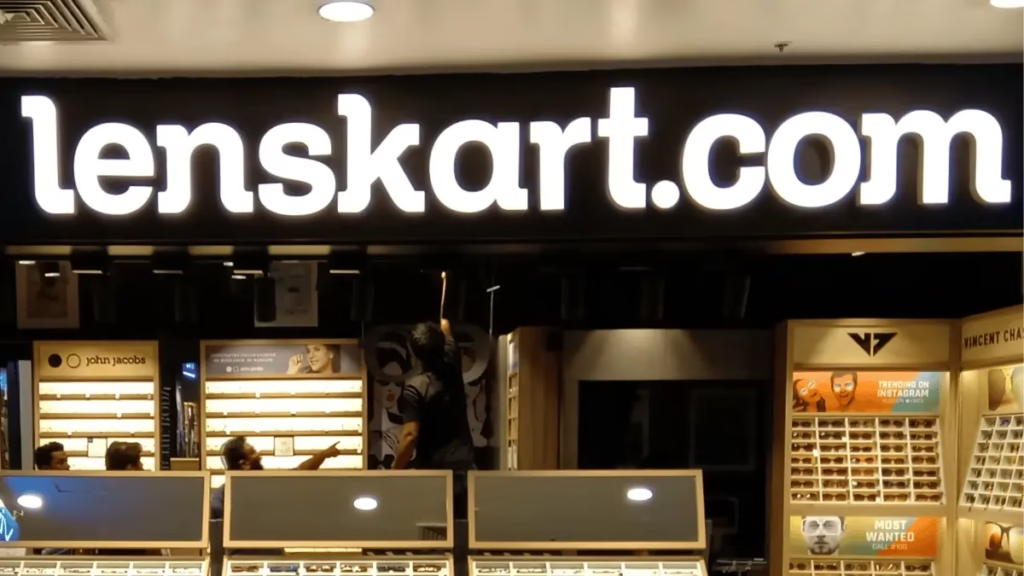
India’s largest eyewear retailer, Lenskart Solutions, has opened its ₹7,278 crore initial public offering (IPO) for subscription on October 31, 2025, with the grey market premium (GMP) indicating a potential 17% listing gain. The IPO, priced between ₹382 and ₹402 per share, will remain open until November 4 and represents one of the most anticipated public offerings of 2025.
Quick Summary: Lenskart IPO at a Glance
Lenskart IPO Quick Facts: The issue opens Oct 31 and closes Nov 4, 2025, with a price band of ₹382-402 per share. Total issue size is ₹7,278 crore (₹2,150 crore fresh issue + ₹5,128 crore OFS). Minimum investment: ₹14,874 for 37 shares. Current GMP: ₹70 (17.41% premium). Listing date: November 10, 2025.
Lenskart’s IPO comprises a fresh issue of ₹2,150 crore and an offer for sale (OFS) of ₹5,128 crore by existing shareholders, including SoftBank, Kedaara Capital, and Temasek. The company raised ₹3,268 crore from anchor investors on October 30, 2025, one day before the public subscription opened. With India’s largest eyewear retail network of 2,723 stores and reported revenue of ₹6,652 crore in FY25 (up 22.6% YoY), Lenskart is positioning itself for aggressive expansion.
Table of Contents
What is Lenskart IPO Grey Market Premium (GMP)?
Grey Market Premium (GMP) represents the additional amount investors are willing to pay for IPO shares above the issue price in the unofficial grey market before official listing. This parallel market operates outside stock exchanges, where shares are traded informally between individuals and small brokers based on speculation and demand.
Current Lenskart GMP Today
The Lenskart IPO grey market premium stood at ₹70 per share as of October 31, 2025, at 11:59 AM. This means investors in the grey market are willing to pay ₹70 above the upper price band of ₹402, totaling ₹472 per share. The current GMP reflects a potential listing premium of 17.41% over the issue price.
However, the GMP has shown significant volatility throughout October 2025. In mid-October, grey market reports pegged Lenskart shares at around ₹510, suggesting a GMP of approximately ₹108 (27% premium). By October 29, the GMP dropped to ₹48 (approximately 12% gain) as valuation concerns spread among retail investors. The current stabilization at ₹70 indicates cautious optimism balanced with valuation awareness.
How GMP Predicts Listing Gains
While GMP serves as an important indicator of investor sentiment, it doesn’t guarantee actual listing-day performance. The grey market premium helps underwriters gauge demand and allows investors to assess market enthusiasm before the official debut. A positive GMP indicates strong interest, while negative GMP suggests weak demand and potential listing losses.
For Lenskart, the trajectory from 27% premium to the current 17% reflects how initial exuberance has given way to more realistic expectations as investors scrutinize the company’s 230X price-to-earnings ratio.
Lenskart IPO Details and Timeline
Price Band and Lot Size
Lenskart Solutions has fixed its IPO price band at ₹382 – ₹402 per share. Investors can bid for the IPO in lots of 37 shares, making the minimum investment ₹14,874 (37 shares × ₹402) at the upper end of the price band. Retail investors can apply for a maximum of 13 lots (481 shares), requiring ₹1,93,361. High Net Worth Individuals (HNIs) must apply for a minimum of 14 lots (518 shares), totaling ₹2,08,236.
Issue Size and Structure
The total Lenskart IPO size is ₹7,278.02 crore, divided into two components:
Fresh Issue: ₹2,150 crore (5.35 crore new shares) proceeds will fund new store expansion, technology infrastructure, cloud investments, brand marketing, potential acquisitions, and general corporate purposes.
Offer for Sale (OFS): ₹5,128.02 crore (12.76 crore shares) existing shareholders including SoftBank, Kedaara Capital, Temasek, and promoters will sell their stakes.
At the upper price band, the company seeks a valuation of approximately ₹69,726 crore (nearly ₹70,000 crore).
Important Dates
| Event | Date |
|---|---|
| IPO Opens | October 31, 2025 |
| IPO Closes | November 4, 2025 |
| UPI Mandate Deadline | November 4, 2025 (5 PM) |
| Basis of Allotment | November 6, 2025 |
| Refund Initiation | November 7, 2025 |
| Share Credit to Demat | November 7, 2025 |
| Listing Date (BSE/NSE) | November 10, 2025 |
The share allotment will be finalized on November 6, with successful applicants receiving shares in their demat accounts by November 7.
Lenskart IPO Subscription Status (Live Updates)
Day 1 Subscription Status: As of October 31, 2025 (10:54 AM), Lenskart IPO was subscribed 0.08 times overall. Retail Individual Investors (RIIs) subscribed 0.34 times, Non-Institutional Investors at 0.07 times, and Employees at 0.26 times. By afternoon, the issue was fully subscribed on Day 1, with QIBs leading the bidding.
The IPO was fully subscribed on its first day itself, demonstrating strong investor interest despite valuation concerns. The Qualified Institutional Buyers (QIBs) segment led the subscription, which typically indicates confidence from sophisticated investors. The retail and non-institutional segments showed steady participation throughout the day.
About Lenskart Solutions: Business Model Explained
Founded in 2010 by Peyush Bansal (who later became a judge on Shark Tank India), Lenskart is engaged in designing, manufacturing, branding, and retailing eyewear products. The company’s product portfolio includes prescription eyeglasses, sunglasses, contact lenses, and eyewear accessories. According to the Redseer Report, Lenskart is India’s largest and one of Asia’s two largest organized retailers of prescription eyeglasses by B2C sales volume in FY2025.
Lenskart operates through an omnichannel model with 2,723 stores across India and international markets, combining tech-enabled digital channels with physical presence. The company owns centralized manufacturing facilities that enable quality control and quick delivery a significant competitive advantage. Its direct-to-consumer approach and in-house designs have helped Lenskart differentiate itself in a market where organized players account for only 9-10% of the total ₹18,000-20,000 crore eyewear market.
Revenue and Profitability in FY2025
Lenskart reported operating revenue of ₹6,652.5 crore in FY2025, marking a 23% increase from ₹5,427.7 crore in FY2024. More significantly, the company swung to a net profit of ₹297.3 crore in FY2025 after posting a loss of ₹10.2 crore in the previous fiscal year. This marked a major turnaround and the company’s first full-year profit.
In Q1 FY2026 (April-June 2025), Lenskart maintained profitability with a net profit of ₹61.2 crore compared to a loss of ₹11 crore in the same quarter the previous year. Operating revenue for the quarter stood at ₹1,894.5 crore, up 25% year-over-year. The company spent approximately ₹0.99 to earn each ₹1 of revenue in FY2025, with improving EBITDA margins and return on capital employed (ROCE).
Market Leadership and Competitive Position
Lenskart faces competition from both online and offline players in India’s fragmented eyewear market. Major competitors include:
- Titan Eye Plus: Over 550 stores across 229 cities, backed by Tata’s brand trust
- GKB Opticals: Approximately 70 stores, primarily in Eastern India
- Specsmakers: 290+ retail stores, strong presence in South India
- Coolwinks: Leading online eyewear brand based in Gurugram
Additionally, Lenskart competes with global brands like Ray-Ban and Essilor (which operate their own stores), and e-commerce marketplaces like Amazon and Flipkart that sell eyewear. Despite this competition, Lenskart’s scale, omnichannel presence, and manufacturing integration give it a strong moat.
Lenskart Share Price and Valuation Analysis
Based on the current GMP of ₹70, Lenskart shares are expected to list at approximately ₹472 on November 10, 2025 a 17.41% premium over the issue price of ₹402. However, the valuation has sparked intense debate among analysts and veteran investors.
Why Analysts Call It “Stretched”
Valuation Concerns: Lenskart IPO is priced at over 200X its FY25 earnings, with a P/E ratio of approximately 230X. Veteran investor Shankar Sharma criticized the valuation, noting the company is going public at nearly 10X revenue despite modest profitability. Analysts warn that much of the price factors in future expansion, leaving little room for error if growth slows.
At the upper price band of ₹402, Lenskart seeks a valuation exceeding ₹69,700 crore. With FY2025 net profit of ₹297 crore, this translates to a price-to-earnings (P/E) ratio of over 230X significantly higher than most listed peers. The company’s net margin remains relatively low at 4-5%, though the trend is positive.
SBI Securities noted that while valuations appear steep, Lenskart’s long-term growth outlook remains robust. The brokerage acknowledged that listing gains could be limited but emphasized the company’s integrated supply chain, improving profitability, and brand strength as providing a long runway for growth.
How to Apply for Lenskart IPO (Step-by-Step)
You can apply for the Lenskart Solutions IPO through two methods: UPI (Unified Payments Interface) or ASBA (Applications Supported by Blocked Amount).
Applying Through UPI
Online Application via Broker’s App:
- Log in to your broker’s trading platform (Zerodha, Groww, Angel One, etc.)
- Navigate to the IPO section in the app or website
- Select “Lenskart Solutions IPO” from the ongoing IPO list
- Enter your bid details: quantity (multiples of 37 shares) and price (₹382-₹402)
- Enter your UPI ID (must be linked to your own bank account)
- Accept the undertaking and submit the application
- Approve the UPI mandate request in your UPI app (Google Pay, PhonePe, BHIM, Paytm)
- You must approve the mandate by 5 PM on November 4, 2025
Your application amount gets blocked when you submit. If you receive allotment, the amount is debited; otherwise, it gets unblocked after the allotment process.
Applying Through ASBA
The ASBA facility is available through your bank’s net banking portal:
- Download the IPO application form from NSE/BSE website or collect from your bank branch
- Fill in personal details: name, address, PAN, demat account details
- Select investor category (Retail/Non-Institutional/HNI) and investor status (Individual)
- Enter bid details and ASBA bank account number
- Submit the form to your bank or broker
- The application amount gets blocked in your bank account until allotment
5 Key Risks Before Investing in Lenskart IPO
While Lenskart presents a compelling growth story, the company’s Red Herring Prospectus (RHP) and analysts have flagged several material risks:
1. Stretched Valuation (Over 200X P/E): The IPO is priced at a steep valuation over 200X FY25 earnings leaving little margin for error if growth slows or profitability disappoints. Much of the price assumes sustained rapid expansion and market leadership, which may not materialize if competition intensifies or consumer preferences shift.
2. Heavy Dependence on China for Raw Materials: Raw materials account for approximately 25% of Lenskart’s total expenses (₹467.34 crore or 25.45% in Q1 FY26). The company sources frames and components from China through its joint venture Baofeng Framekart Technology Ltd. Any supply chain disruptions, geopolitical tensions, or price fluctuations could hurt margins and operations.
3. Regulatory Uncertainty and ED Scrutiny: The Directorate of Enforcement (ED) in Gurugram has sought information and documents from Lenskart under the Foreign Exchange Management Act (FEMA). While the company has complied, the RHP cautions that future regulatory actions cannot be ruled out, which could affect reputation and financial standing.
4. Manufacturing and Environmental Compliance Risks: Lenskart’s large-scale manufacturing facilities are subject to environmental, health, and safety laws. Any violation, non-compliance, or operational breakdown could lead to penalties, production disruption, or reputational damage. Even short-term shutdowns could dent earnings significantly.
5. Integration Risks from Owndays Acquisition: Lenskart acquired Owndays Inc., a Japanese eyewear retailer, for ₹29,276 crore a deal that created goodwill worth ₹18,611 crore on the balance sheet. This reflects high synergy expectations, and any challenges in integrating operations or underperformance of Owndays could weigh on consolidated profitability and return ratios.
Lenskart IPO: Pros and Cons
| Advantages (Pros) | Disadvantages (Cons) |
|---|---|
| India’s largest eyewear retailer with 2,723 stores and strong brand recall | Valuation exceeds 200X P/E ratio, leaving limited room for error |
| First full-year profit (₹297 crore in FY25) after years of losses; consistent Q1 FY26 profit | Net margin remains low at 4-5%; profitability partly driven by “other operating income” |
| Backed by marquee investors: SoftBank, Temasek, Kedaara Capital | Heavy dependence on Chinese suppliers for 25% of raw material expenses |
| Omnichannel presence and in-house manufacturing provide competitive moat | Ongoing Enforcement Directorate (ED) scrutiny under FEMA regulations |
| Operates in a vast underpenetrated market (organized sector is only 9-10% of total) | ₹18,611 crore goodwill from Owndays acquisition poses integration risks |
| Strong revenue growth: 23% YoY in FY25, 25% YoY in Q1 FY26 | GMP has declined from 27% to 17% as valuation concerns spread |
| Grey market premium of ₹70 indicates 17% potential listing gains | Medical advances in refractive error treatment may reduce demand for corrective eyewear |
What Brokerages Say: Expert Reviews
SBI Securities – “Subscribe for Long Term”: SBI Securities has recommended subscribing to Lenskart IPO for the long term, citing the company’s robust business model and leadership in an underpenetrated market. The brokerage acknowledges that listing gains could be limited due to steep valuations but emphasizes that Lenskart’s integrated supply chain, improving profitability, and brand strength provide a long runway for growth.
Analysts’ Cautious Optimism: While valuations appear stretched, most analysts note that Lenskart’s long-term growth outlook remains robust. The market is viewing Lenskart more as a technology and supply chain company capable of rapid scaling rather than a traditional retail business. India’s GDP is expected to grow at 6.4% CAGR between 2024 and 2029, with rising disposable incomes driving consumer spending toward organized players.
Veteran Investor Criticism: Veteran investor Shankar Sharma criticized the Lenskart IPO valuation, pointing out that the company is going public at nearly 10X revenue. While he acknowledged the growth potential, Sharma expressed concern that the valuation leaves no margin of safety for investors.
Comparison Table: Lenskart vs Top Eyewear Competitors
| Parameter | Lenskart | Titan Eye Plus | GKB Opticals | Specsmakers |
|---|---|---|---|---|
| Founded | 2010 | 2007 | Earlier | 2007 |
| Store Count | 2,723 | 550+ | ~70 | 290+ |
| Coverage | Pan-India + Asia | 229 cities | Eastern India | South India |
| FY25 Revenue | ₹6,652 crore | Not disclosed | Not disclosed | Not disclosed |
| Business Model | Omnichannel + Manufacturing | Retail + Tata brand | Retail distributor | Retail chain |
| Market Position | #1 in India | Strong brand presence | Regional player | Regional player |
Frequently Asked Questions (FAQs)
When does the Lenskart IPO open and close?
The Lenskart IPO opened for subscription on October 31, 2025, and will close on November 4, 2025. The UPI mandate deadline is 5 PM on November 4.
What is the current Lenskart IPO GMP today?
As of October 31, 2025, at 11:59 AM, the Lenskart IPO grey market premium (GMP) stands at ₹70 per share, indicating a potential listing price of ₹472 and a 17.41% listing gain over the issue price of ₹402.
What is the Lenskart IPO price band and minimum investment?
The price band is set at ₹382-₹402 per share. The minimum lot size is 37 shares, requiring a minimum investment of ₹14,874 at the upper price band.
When is the Lenskart IPO listing date?
Lenskart shares are scheduled to list on the BSE and NSE on November 10, 2025. The basis of allotment will be finalized on November 6, 2025.
What is the total Lenskart IPO size?
The total issue size is ₹7,278.02 crore, comprising a fresh issue of ₹2,150 crore and an offer for sale (OFS) of ₹5,128.02 crore by existing shareholders.
Is Lenskart IPO overvalued?
Analysts consider the valuation stretched at over 200X P/E ratio and approximately ₹70,000 crore market cap. However, supporters argue that the premium reflects Lenskart’s technology platform, manufacturing integration, and leadership in an underpenetrated market with long-term growth potential.
How do I check Lenskart IPO allotment status?
You can check the allotment status on the registrar’s website (Link Intime India Private Ltd) and on the NSE/BSE websites starting November 6, 2025.
What are the main risks of investing in the Lenskart IPO?
Key risks include stretched valuation (200X+ P/E), dependence on Chinese raw material suppliers, ongoing ED scrutiny under FEMA, manufacturing compliance risks, and integration challenges from the ₹29,276 crore Owndays acquisition.
Should I apply for the Lenskart IPO?
SBI Securities recommends subscribing for long-term investors, citing strong business fundamentals despite steep valuations. However, investors should assess their risk appetite, as listing gains may be limited and the valuation leaves little margin for error.
Who are Lenskart’s main competitors?
Major competitors include Titan Eye Plus (550+ stores), GKB Opticals (70 stores), Specsmakers (290+ stores), Coolwinks (online), and global brands like Ray-Ban and Essilor.
Featured Snippet Boxes
What is Lenskart IPO GMP?
Lenskart IPO grey market premium (GMP) is ₹70 as of October 31, 2025, which means the shares are trading ₹70 above the issue price of ₹402 in the unofficial market. That implies a possible listing price of around ₹472, or about a 17.41% premium. GMP can hint at demand and sentiment, but it doesn’t guarantee day-one performance.
When will Lenskart IPO list?
The Lenskart IPO opens on October 31, 2025 and closes on November 4, 2025. Allotment is expected on November 6, and shares should hit demat accounts on November 7. The stock is scheduled to list on BSE and NSE on November 10, 2025.
What is Lenskart’s valuation?
At the upper price band of ₹402, Lenskart is targeting a valuation of about ₹69,726 crore. That’s a little over 200 times its FY25 earnings of ₹297 crore. Some analysts see this as expensive, while others say it’s pricing in long-term growth in a still underpenetrated eyewear market.


